

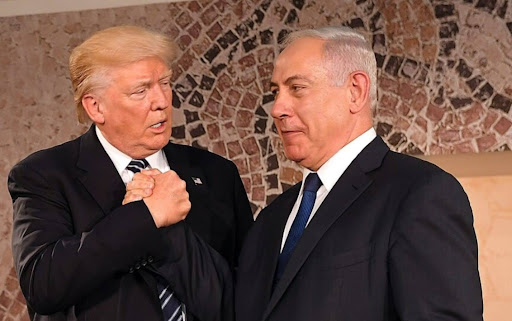
In an unusually candid moment before the House Intelligence Committee, Director of National Intelligence Tulsi Gabbard acknowledged that the United States and Israel do not share identical objectives in their ongoing war against Iran. Her statement gave congressional voice to a reality that had been visible on the ground for weeks — and which became impossible to ignore after Israel struck Iran’s South Pars gas field against the expressed wishes of US President Donald Trump. “The objectives that have been laid out by the president are different from the objectives that have been laid out by the Israeli government,” Gabbard told lawmakers.
Trump has been consistent and clear: his goal is to prevent Iran from building a nuclear weapon. Israeli Prime Minister Benjamin Netanyahu has framed the war in far more expansive terms — as an opportunity to reshape the entire Middle East and potentially install a more moderate Iranian government. That difference in scope and ambition underlies many of the tactical disagreements that have emerged in recent weeks, including the gas field dispute.
The South Pars strike brought the divergence into sharp relief. Trump said publicly that he had warned Netanyahu not to carry out the attack, and Iran responded with strikes on energy infrastructure across the region. Gulf nations urged Washington to rein in Israel, and global energy prices surged. Netanyahu confirmed Israel acted alone, agreed to stop further attacks on the gas field, and defended his alliance with Trump even as he acknowledged the disagreement.
Trump’s own position has also evolved in notable ways. He previously hinted at supporting a popular uprising against Iran’s government, suggesting Iranians might soon have the opportunity to remove their leaders. More recently, he has expressed doubt about whether that is realistically achievable, calling it “a very big hurdle” for people without weapons. The retreat from regime-change rhetoric signals a narrowing of American ambition, even as Israel’s goals remain expansive.
US officials have worked hard to present a unified front, stressing ongoing coordination and asserting that American strategy is shaped by American interests. But those very statements reveal the underlying dynamic: the US and Israel are aligned on some things and not on others. As long as the gap between nuclear containment and full regional transformation remains, so will the tensions that gap produces.
